
Building Your System
Snap Ring vs Discbound: Which Modular System Carries Slimmer?
Both systems let you add, remove, and reorder pages. The real difference is the spine, and what it does to bulk and lay-flat. Here is how they compare.
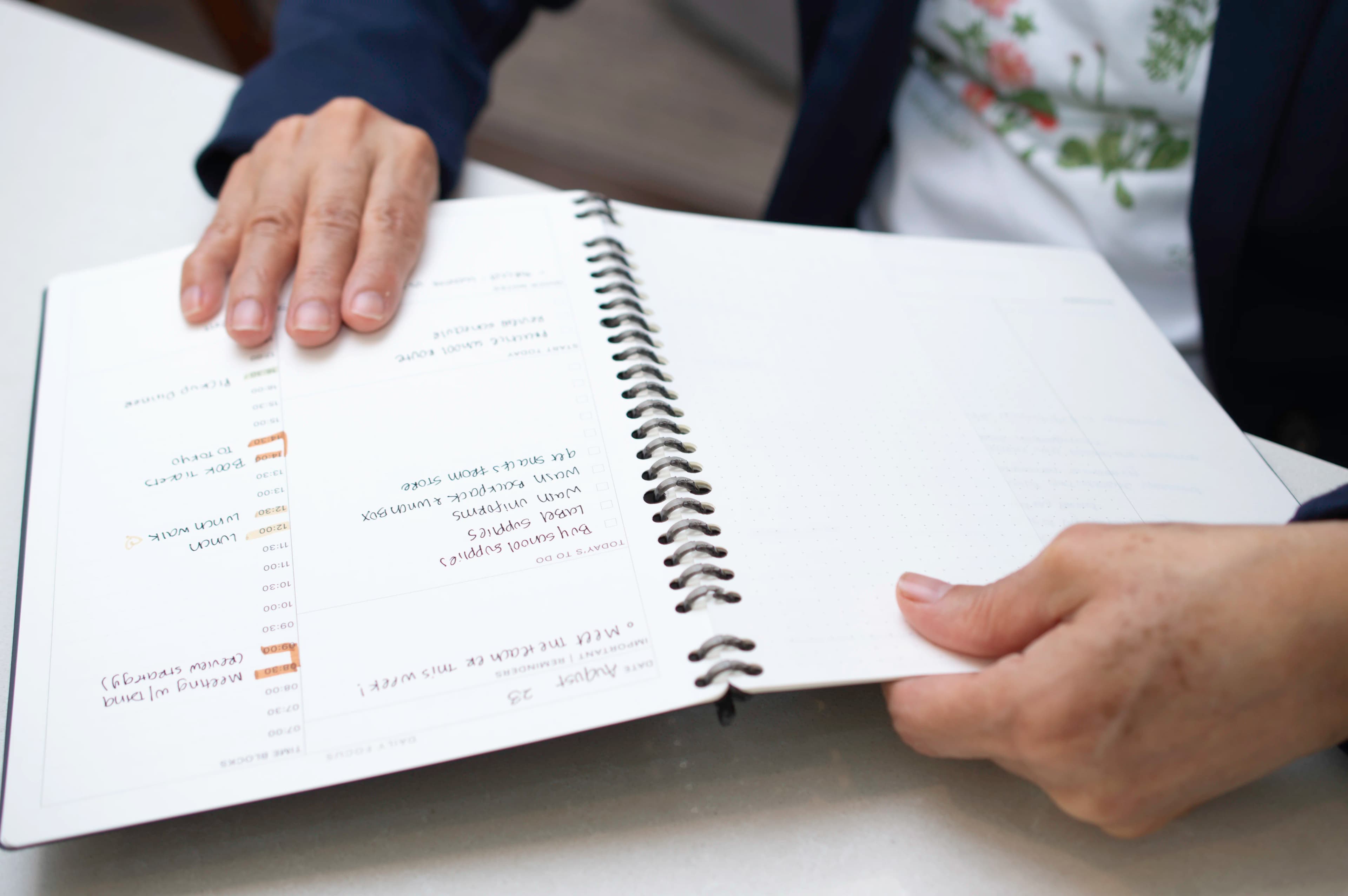
A snap-ring system and a discbound system both let you add, remove, and reorder pages whenever you want. The difference is the spine. Discbound holds pages on a row of discs, which adds thickness. Griffin's Opus Snap Ring holds pages on a slim ring that opens flat, so the notebook stays thin and lies flat.
How do a snap ring and discbound compare at a glance?
Both are loose-leaf systems, so the comparison comes down to how the mechanism affects daily carry and use.
| Feature | Opus Snap Ring | Discbound |
|---|---|---|
| Bulk | Slim ring stays thin, even when full | A row of discs adds thickness and a raised spine |
| Lies flat | Yes, opens flat and folds all the way back on itself | Yes, folds all the way back on itself |
| Page swaps | Two-hand open, then lift pages in or out; they hold until you move them | Fast one-handed removal; pages release easily |
| Page capacity | Up to about 40 sheets | Scales with disc diameter; larger discs hold more |
| Page durability | Pages sit on a smooth ring, without the cut notches that can fray | Punched pages can wear or tear on thinner paper over time |
| Size options | B5 | Varies by brand |
What is the Opus Snap Ring, and how does it work?
The Opus Snap Ring is the mechanism inside the Griffin Opus Modular Binder. It is a slim ring that opens with a deliberate two-hand motion and closes flush. You lift pages in or out, snap it shut, and the pages hold securely.
That two-hand motion is on purpose. It means pages do not loosen or slide out in a bag, and the spine stays thin because there are no discs to sit proud of the cover. The binder holds up to about 40 sheets and ships with 30 dot-grid sheets to start.
Which carries slimmer, and which lies flatter?
On slimness, the snap ring is the thinner carry. Discs have to stand off the page edge to work, so a discbound cover always carries a raised spine and a little extra thickness. The Opus Snap Ring keeps the profile close to the paper, so a full binder still slides easily into a bag.
On lay-flat, both do well. The Opus Snap Ring opens flat and folds all the way back on itself, like a spiral notebook, so you can fold the cover behind and write on a single page in one hand. Discbound folds all the way back too. Neither is limited here. The difference that remains is the profile: the snap ring does all of this while staying slimmer.
How do the two hold and release pages?
The Opus Snap Ring holds your pages on a secure ring. You open it with a two-hand motion, move the pages you want, and close it, and they stay exactly where you put them. No loose sheet at the bottom of your bag.
Discbound releases pages faster, straight off the discs with one hand, which suits constant reshuffling. That same easy release has a trade-off. Because discbound pages are held by punched notches, a page can come loose when you did not intend it to, and on thinner paper those notches can wear or tear over time. The snap ring avoids that, since the pages sit on a smooth ring rather than in cut slots.
Which system is right for you?
Pick discbound if one-handed, constant reshuffling is the thing you value most, and you want a very wide range of sizes off the shelf.
Pick the Opus Snap Ring if you want a slimmer daily carry, a secure hold that survives a commute, and a system built around one focused B5 page at a time. Both let you add and remove pages freely. The question is simply what you want the spine to do for you.
If the second description sounds like your day, build your system and start with the binder.
Quick answers
Is a snap-ring notebook better than discbound?
Neither is universally better. A snap-ring system like Griffin's Opus Snap Ring carries slimmer and holds pages more securely, while discbound allows faster one-handed page swaps and comes in more sizes. The right choice depends on whether you value slim, secure carry or fast reshuffling.
Does a discbound notebook lie flat?
Yes. Discbound notebooks lie flat and fold all the way back on themselves. Griffin's Opus Snap Ring does the same: it lies flat and folds all the way back, while keeping a slimmer profile.
Can you add and remove pages from the Opus Snap Ring?
Yes. The Opus Snap Ring opens with a deliberate two-hand motion so you can lift pages in or out, then closes flush to hold them securely. The Modular Binder holds up to about 40 sheets.
Why is a snap ring slimmer than discbound?
Discs must stand off the page edge to hold and release pages, which adds thickness and a raised spine. A snap ring keeps the profile close to the paper, so the notebook stays thin even when full.
Does carrying one slim notebook help make daily life easier?
It can mean less to manage. A single slim binder is one thing to grab, pack, and keep track of, rather than several. Griffin's Opus Snap Ring keeps that one binder thin even when full, so carrying your notes feels light and unfussy instead of like one more bulky item in the bag.
Put it into practice
Build your system.
Start with the binder and add the pages that match how you actually work.
Build your system →