
Productivity Methods
How to Build a Meeting Notes System You'll Actually Use
Most meeting notes are just transcription nobody reads again. Here is a simple paper system that captures decisions and next steps you can find later.
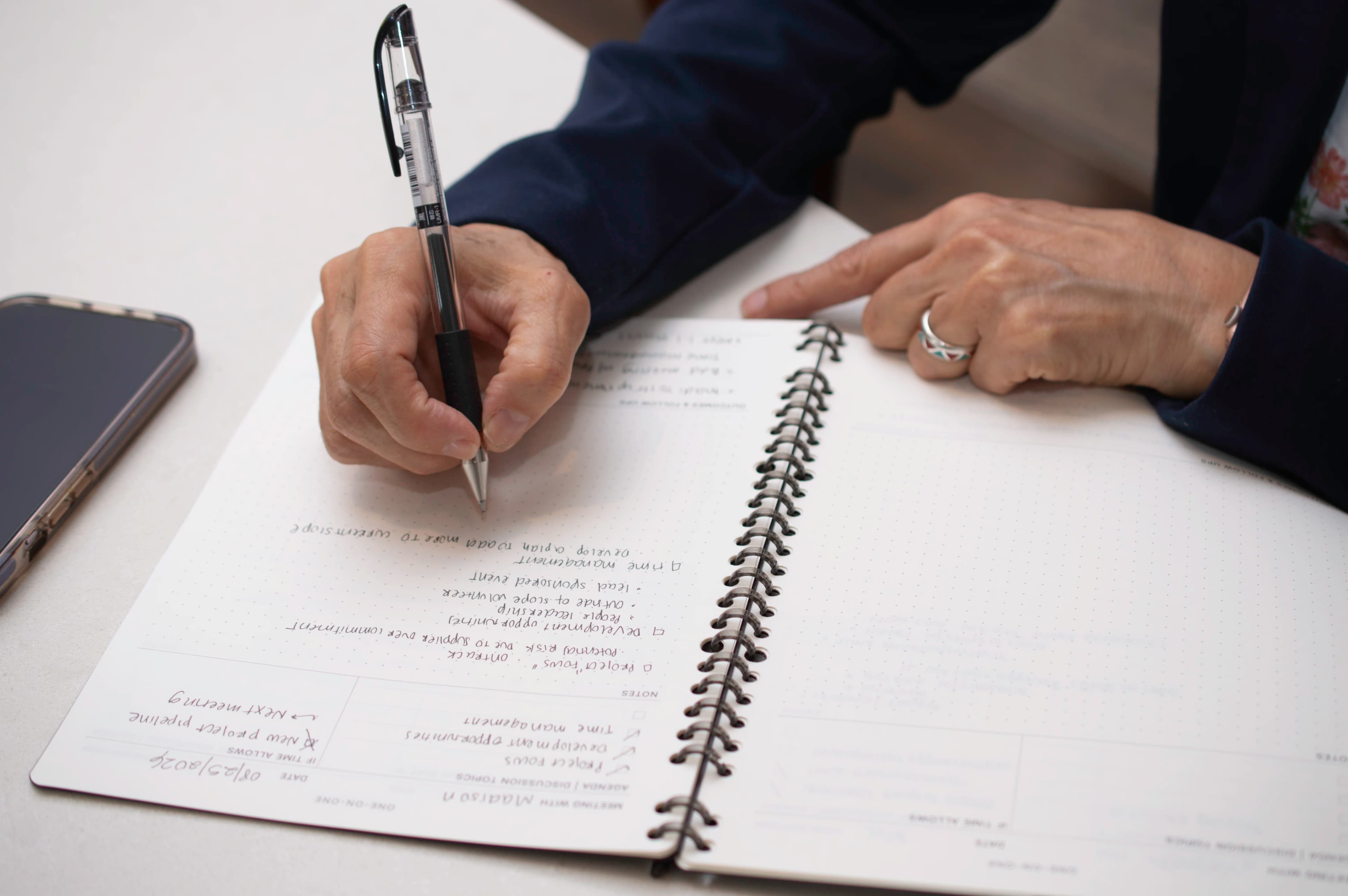
Most meeting notes are useless, and I say that as someone who took useless ones for years. Page after page of near-transcription, scribbled fast, never read again. The meeting ended, the notes went into a drawer, and the actual outcomes lived in my memory until they did not.
A meeting notes system is just a small set of habits that make the notes worth keeping. Here is the one I use, and it is simpler than you would think.
Separate the two kinds of meetings
This was the shift that fixed everything for me. A team meeting or a project kickoff is a completely different animal from a one-on-one, and trying to run both on the same blank page is why my notes were mush. So I split them.
For the group stuff, decisions and action items are the whole game. I use a Smart Meeting insert that keeps a spot for who was there, what got decided, and what I owe versus what someone owes me. When I take notes with those slots already waiting, I stop transcribing and start listening for the two things that matter: what we decided, and who does what next.
For the recurring one-on-ones, it is a different job. Those are about the thread over time, not one meeting. I use a One-on-One insert per person so I can see what we talked about last time before I walk in. Nothing makes a check-in go better than remembering the thing they told you three weeks ago and asking how it turned out.
Capture next actions in the moment, in one spot
The single most common way notes fail is that the to-do is buried in the middle of a paragraph. In three days you cannot find it. So I keep next actions in their own column or their own corner of the page, not woven into the notes. When the meeting ends, that is the only part I have to look at.
Do the two-minute close
Before you stand up, or right after, read back the page and circle the actions that are yours. That is it. Two minutes. This is the step everyone skips and it is the step that makes the whole system real. Notes you never revisit are just handwriting practice.
Keep them where you can find them again
Here is where paper beats another app for me. When my meeting pages live in one binder in a known order, I can flip to the last time this project came up in about four seconds. No search box, no wondering which app I used. The one-on-one pages stay grouped by person, the project pages stay grouped by project, and past-me stops sabotaging present-me.
You do not need seven kinds of pages to do this. You need a reliable spot for decisions, a reliable spot for next actions, and a way to find both later. Start there. The meeting where I finally had last month's decisions in front of me, instead of guessing, was the meeting I stopped dreading being the one who takes notes.
Quick answers
Can taking notes on paper help me stay present in meetings?
It can, for many people. When your notes live on a page with set spots for decisions and actions, you are not typing behind a screen or tabbing away. You listen for the two things that matter and write them down. For many people, that helps make it easier to be in the room instead of behind a laptop.
How do I stop feeling buried in meeting notes I never use?
For many people, the fix is to capture less and structure more. Keep next actions in their own corner of the page, not woven into paragraphs, and do a two-minute read-back to circle what is yours. With one place to look afterward, the notes become worth keeping instead of a pile you avoid.
Put it into practice
Build your system.
Start with the binder and add the pages that match how you actually work.
Build your system →