
Guides & Wellbeing
A Calmer Work-From-Home Day, on Paper
Work from home planning on a single page: a start-of-day ritual, deep-work blocks, and a written shutdown so you can actually log off.
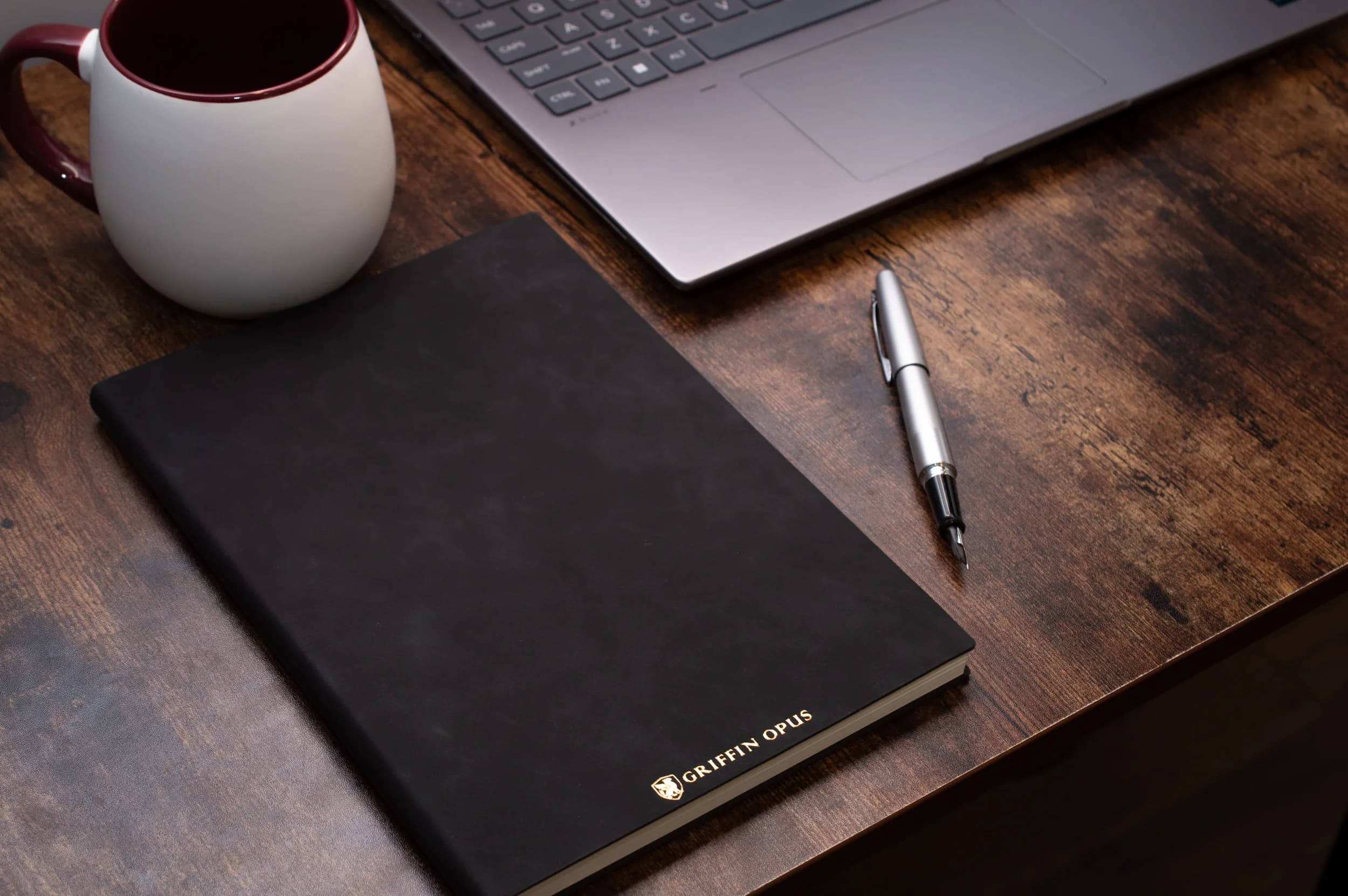
The trouble with working from home is not that there is too much to do. It is that the edges have gone soft. The commute that once separated the day from the evening is gone. The office that once said "this is where work happens" is now the same room where you eat lunch and fold laundry. Attention leaks in every direction: a message here, a load of washing there, an email that pulls you off the one thing you meant to finish. Nothing is urgent, and yet the day slips away.
You cannot rebuild a commute. But you can rebuild the structure it used to provide, and a single sheet of paper is a surprisingly good place to start. Not an app that pings you, not a calendar that fills itself. One page, chosen deliberately, that holds the shape of the day so your mind does not have to. A binder lets you plan the day on a single page and carry it wherever the work goes.
Start with a short ritual, not a long list
Good work from home planning begins before the first message is read. Take five quiet minutes at the top of the day and write down two or three priorities. Not ten. Three at most, because a page that promises everything delivers nothing but guilt by evening.
The act of writing them by hand matters more than it seems. It is slow enough to force a choice, and choosing is the whole point. When the priorities live on paper in front of you, the drift toward whatever is loudest has something to push against. You are no longer reacting to the day; you have declared what it is for.
Structure at home is not about doing more. It is about deciding, once, so you are not deciding all day.
Separate deep work from admin
The second thing a planning page can do is keep two very different kinds of work from bleeding into each other. Deep work needs unbroken time: writing, analysis, the thinking that actually moves something forward. Admin expands to fill whatever space you give it: email, scheduling, the small replies. Left together on one undivided to-do list, admin always wins, because it is easier.
So draw the line yourself. Give the morning, or whatever your sharpest hours are, to one deep-work block and protect it. Push the admin into a named window later in the day, where it can be handled in one pass rather than a hundred interruptions. A few concrete moves make this hold:
- Reserve one 90-minute block for a single deep-work priority, and write it on the page before anything else.
- Batch email and messages into two fixed windows rather than checking them continuously.
- Keep a small "later" margin on the page for stray thoughts, so they leave your head without derailing the block.
- Put chores on the page too, at a set time, so they stop feeling like a reason to get up.
End the day by writing it closed
The hardest part of working from home is not starting. It is stopping. When the desk is ten steps from the sofa, the workday has no natural end, and so it quietly never ends. You keep half-checking, half-working, never quite off.
A written shutdown fixes this better than willpower does. At the end of the day, spend three minutes on the page: note what got done, carry the unfinished items to tomorrow, and write one line about where you are picking up. Then close the binder. The open loops are now held by the paper, not by you, and that is what lets you genuinely log off instead of carrying the day into the evening.
Try only one piece of this tomorrow. Before you open your inbox, write down the three things that would make the day count, and leave the rest for the page to hold.
Quick answers
Can a paper plan help make working from home feel less scattered?
For many people, it can. Working from home softens the edges of the day, so attention leaks toward whatever is loudest. A single page that holds two or three priorities gives the drift something to push against. It is not a commute, but for many people it restores some of the structure a commute used to provide.
How do I actually log off at the end of a work-from-home day?
It can help to write a short shutdown. Read back the page, note what is done and what moves to tomorrow, and close the binder. Putting the day to rest on paper gives you a clear stopping point, which many people find makes it easier to step away instead of drifting back to the laptop.
Put it into practice
Build your system.
Start with the binder and add the pages that match how you actually work.
Build your system →