
Building Your System
Daily, Weekly, or Both? Choosing Your Planner Layout
A calm, practical guide to the main planner layouts: daily, weekly, and monthly. Plus how to mix them to match your real work rhythm.
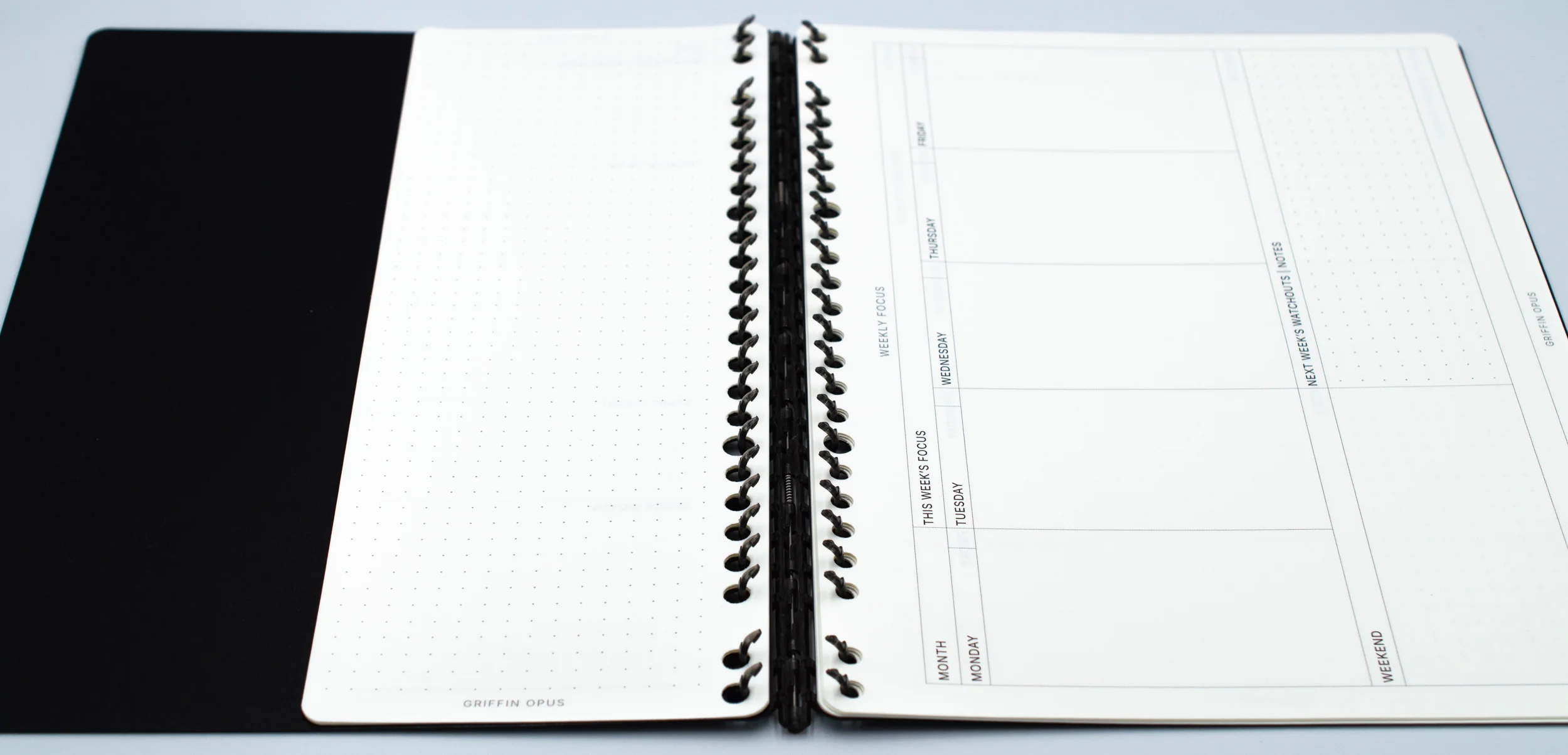
Most people choose a planner and then quietly bend their work to fit it. The layout that looked so orderly in the shop becomes a source of low friction: too many lines on a light day, too few on a heavy one. The better order is the reverse. Start with how your days actually move, then pick the planner layouts that hold that shape. There is no single correct grid, only a closer or looser fit.
The three layouts, and who each one serves
A daily layout gives a full page to a single day. It suits meeting-heavy schedules, high-volume days, and any work that needs time-blocking or a running log of small decisions. When a day has more moving parts than you can hold in your head, the space is a relief rather than an obligation.
A weekly layout sets seven days side by side. It is built for the big picture: seeing where the pressure sits, protecting open afternoons, planning around a lighter or more repetitive schedule. You trade granularity for perspective, which is exactly the trade you want when the week matters more than any one hour of it.
A monthly layout is for orientation, not execution. It holds deadlines, travel, recurring commitments: the landmarks you steer by. Few people run their days from a monthly page, but almost everyone benefits from having one to glance at before the week begins.
Why most people want more than one
The instinct to commit to a single format is understandable, and usually mistaken. Real work rarely keeps one rhythm. A week of back-to-back reviews wants daily pages; the planning week that follows wants a weekly spread; the whole quarter wants a monthly view sitting quietly underneath both.
This is where a modular system earns its place. Because Griffin Opus lets you mix daily and weekly inserts in one binder, you are not choosing a layout for the year. You are choosing one for the season, or the project, or the particular week in front of you. When the work changes, the pages change with it.
The question is not which planner layout is best. It is which layout best matches the rhythm of the work in front of you right now.
Reading your own rhythm
You do not need a system to know your rhythm; you need a few honest questions. Before you commit to a layout, consider how your weeks actually behave rather than how you wish they did.
- How many scheduled commitments fill a typical day: a handful, or a full column?
- Do you think in hours and blocks, or in days and themes?
- Are your weeks fairly uniform, or do heavy and light stretches alternate?
- How far ahead do you genuinely need to see to feel oriented?
- Where does your current planner feel too tight, or too empty?
A meeting-dense role with variable weeks might pair daily inserts for the busy stretches with a weekly spread for planning, and a monthly page at the front for the horizon. A calmer, project-led role might live almost entirely in a weekly layout, dropping in a daily page only when a launch or a deadline demands it. Neither answer is more disciplined than the other. Each simply fits.
Start small today
You do not have to redesign your whole system to feel the difference. Take the next seven days and set them out in a weekly view, then add a single daily page for the busiest day among them. Notice which one you reach for, and how it feels to have the right amount of space rather than a fixed amount. That small comparison will tell you more about your ideal planner layouts than any template ever could, and it is the quiet, unhurried way to build a system that carries the work instead of adding to it.
Quick answers
Can the right planner layout help make my week feel less cramped?
For many people, it can, because the friction usually comes from a poor fit: too many lines on a light day, too few on a heavy one. Start from how your days actually move, then pick the layout that holds that shape. A daily page suits busy days; a weekly spread suits perspective.
Do I have to choose between a daily and a weekly planner?
For many people, no, and mixing them removes a common source of friction. A modular binder lets you keep a weekly spread for perspective and daily pages for busy stretches, side by side. You are not choosing one layout for the year, just the one that fits the season or the week in front of you.
Put it into practice
Build your system.
Start with the binder and add the pages that match how you actually work.
Build your system →